Booth runs cut to the length on your drawing
Module length and joint position are decided in the workshop, from the wall on your drawing, before the first panel is cut. Bench rows come off the same beams with the back dropped.
- Modules
- 1,200 / 1,500 / 1,800 mm
- Depths
- 600 to 750 mm
- Seat height
- 450 mm, all depths
- MOQ
- 12 running metres
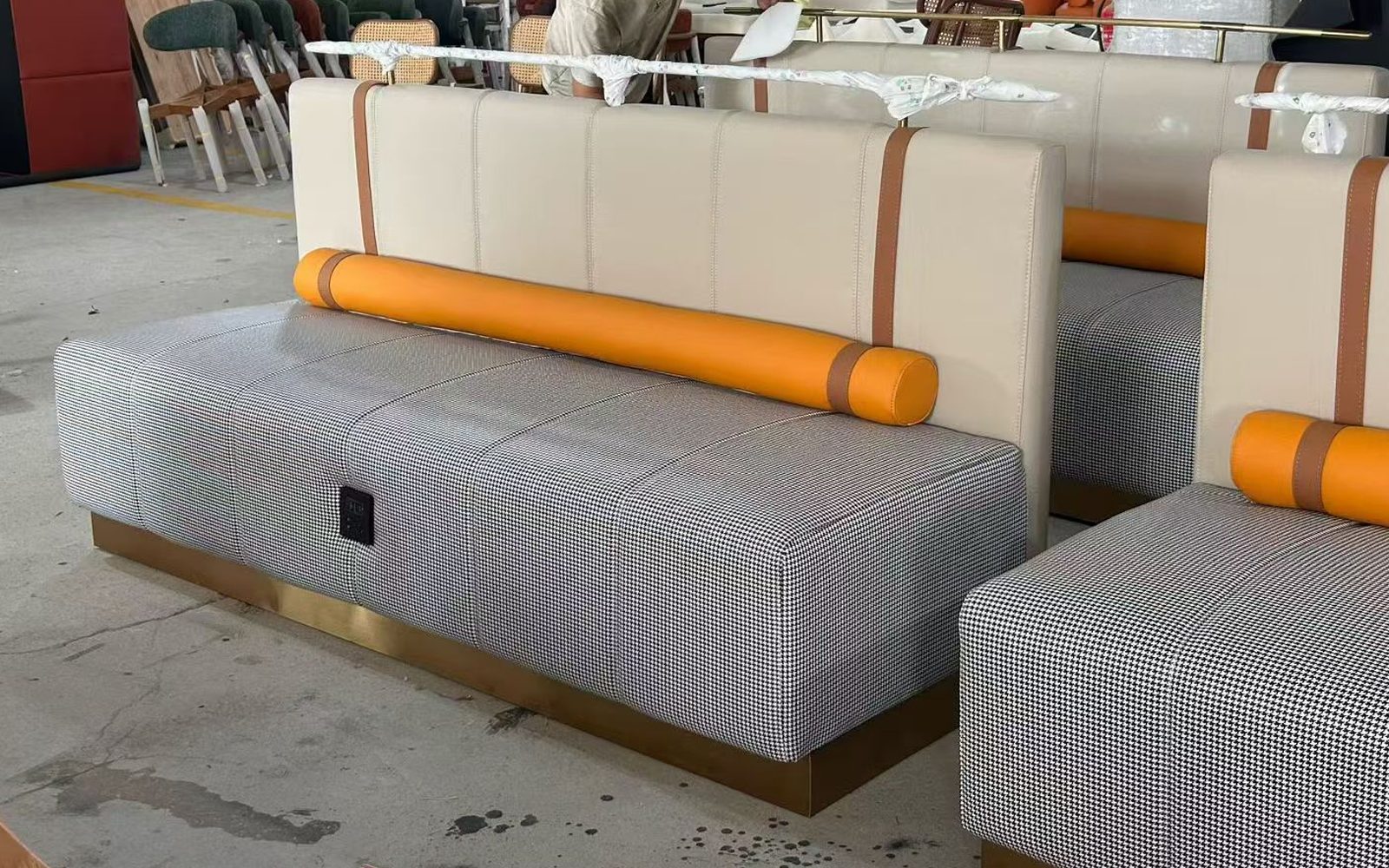
01Joint position comes first
Modules come at 1,200, 1,500 and 1,800 mm, and any wall closes out with a filler panel rather than a cut seat pad, so the run ends square without a joiner improvising on site. Every run ships with one extra 300 mm filler, because the last wall on site is never the one on the drawing.
Back-to-back units share a 36 mm centre panel, which saves 80 mm of floor against two separate benches, and in a 200 m² room that is four extra covers for the same rent. In a 200 m² room that is four extra covers, and it is the reason a middle-of-floor unit beats two wall runs on a seat count.
02Two depths, one seat line
600 mm and 650 mm covers most plans. 650 gives a taller guest somewhere to put a knee and is the depth we send when the brand expects a ninety-minute sitting. Seat height stays at 450 mm either way, so a booth and a chair in the same run sit level.
High-back booths go to 1,450 mm with the same 450 mm seat, the height where a seated guest stops seeing the room.
03What wears first
The toe-kick, then the seat pad foam, then the fabric on the back where shoulders rub. So the toe-kick is removable with the mop in mind, pads lift off a bayonet fitting, and the back panel is 40 mm thick rather than 25.
04Custom booth seating, from your drawing
Custom here means the run length and the joint positions come off your drawing rather than a catalogue. Send the wall elevations with door and window positions marked, and the segments come back numbered in the order they are fixed, so the fitter works along the wall instead of cutting in the room.
Shape, depth, back height, toe-kick recess and cover all sit on the same sheet. Radius runs are made in 1,200 mm faceted segments. Quotes are per running metre, which puts a 12 m pilot and a 60 m store on the same line and makes the two comparable.
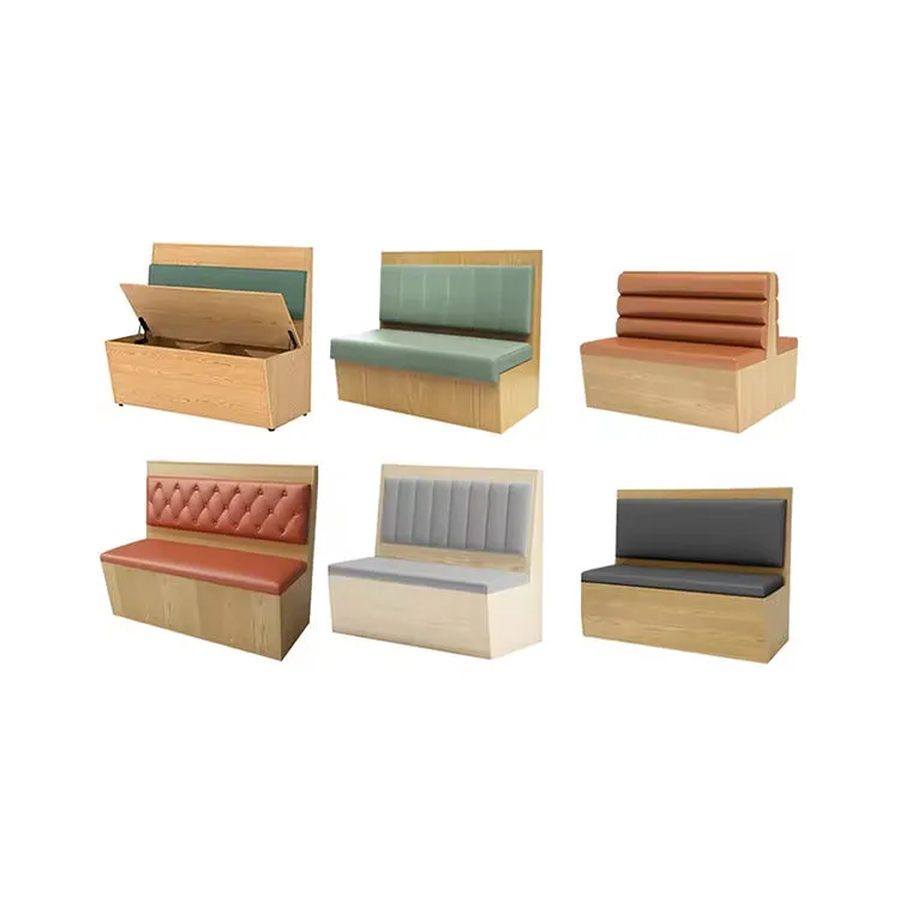
The trade calls the same unit banquette seating when the back runs continuous and a booth when it is broken into modules. Both come off these beams, and the difference is where the back panels butt rather than how the bench is built.
05How commercial seating manufacturers differ
Factories building booth furniture differ on what they cut in-house. Ask whether the frame is welded or screwed, whether the foam is cut on site or bought in blocks, and whether the upholstery is sewn in the same building. Those three answers decide how the 1,800 mm back panel behaves in year three.
Then ask for the module count in the last run shipped and the spare parts that went with it. Under twelve running metres is a sample order, and a 3,600 mm unit travels as a different packing problem from a 1,200 mm one.
06Repairing a run that is already open
Pads, back panels and toe-kicks are orderable on their own code, keyed to the module number stamped on the carcass. One torn pad in module four does not mean a new bench, and a damaged toe-kick unclips without the upholstery coming off.
Re-covering a whole run is quoted per module: in the original fabric where the roll is still traceable, and in the nearest current match where it is not. Colour is matched against a physical swatch, because dye lots move between years.
All models in this family9 models
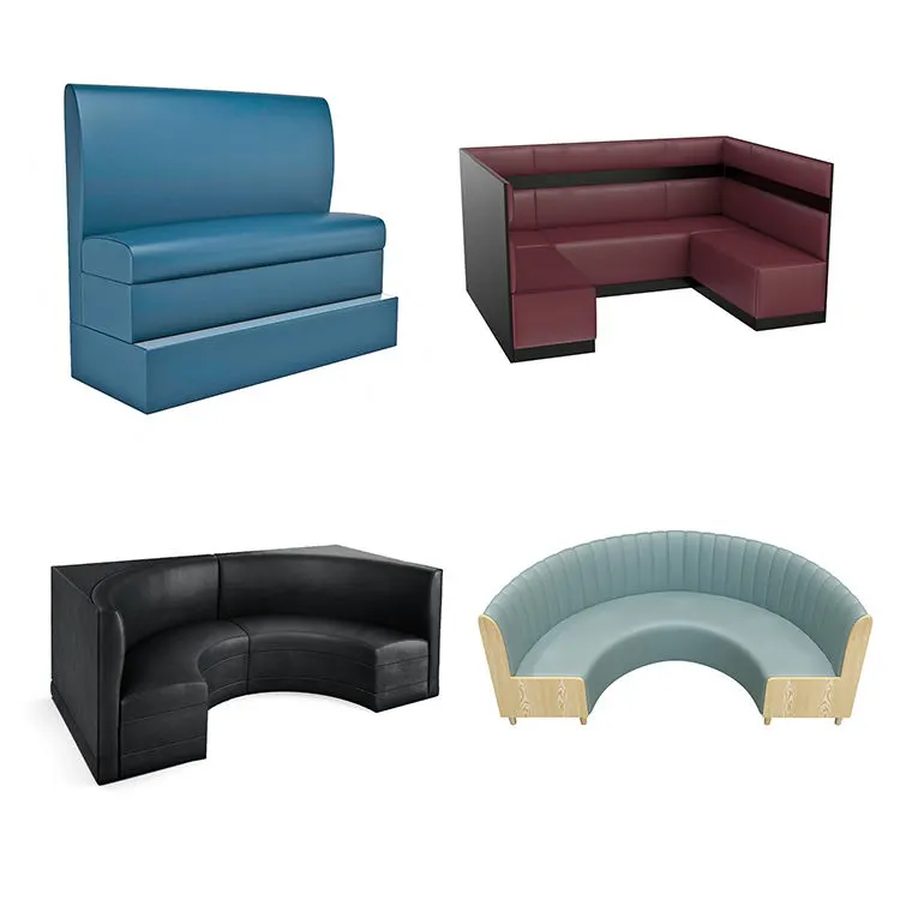
Booth Run, Powder-Coated Steel, Upholstered Seat
- Welded steel tube frame
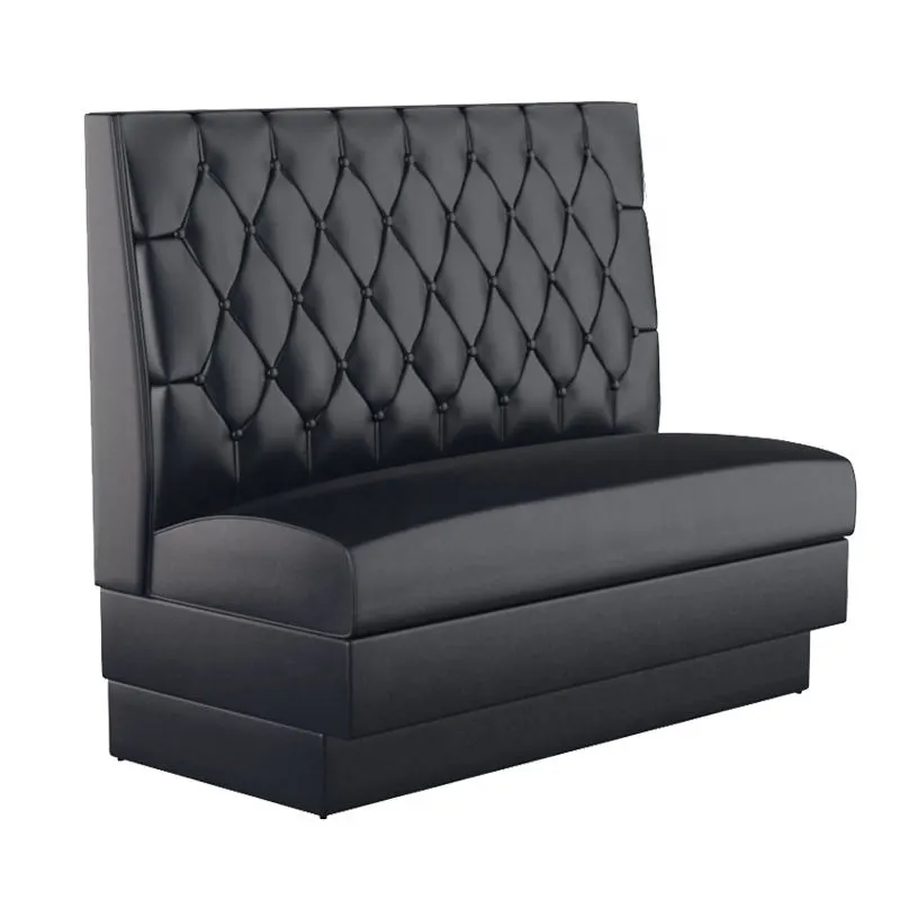
Booth Run, Powder-Coated Steel, Upholstered Seat
- Welded steel tube frame
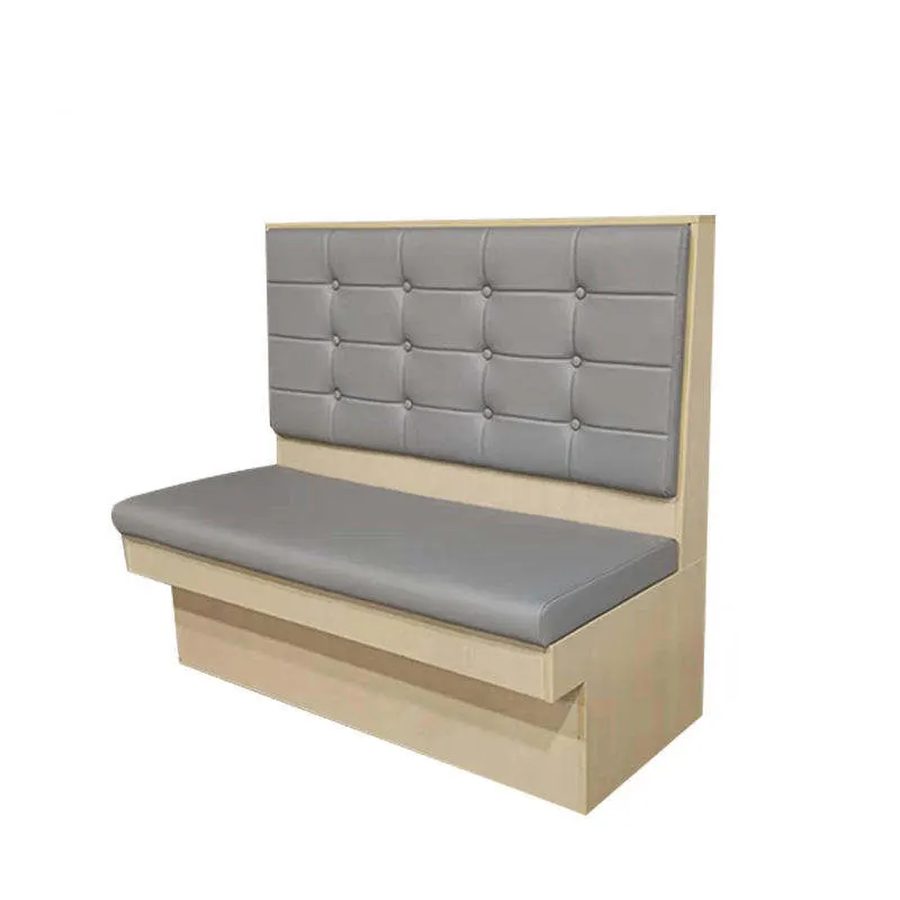
Booth Run, Powder-Coated Steel, Upholstered Seat
- Welded steel tube frame
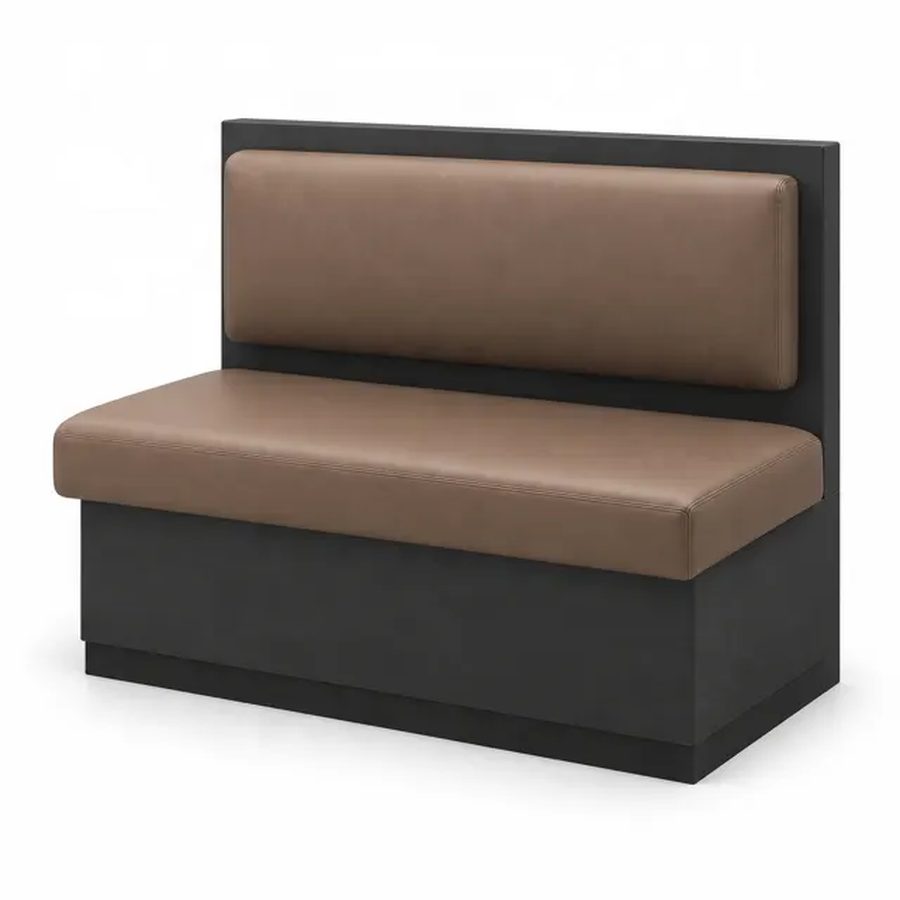
Booth Run, Solid Wood, Upholstered Seat
- Solid wood frame
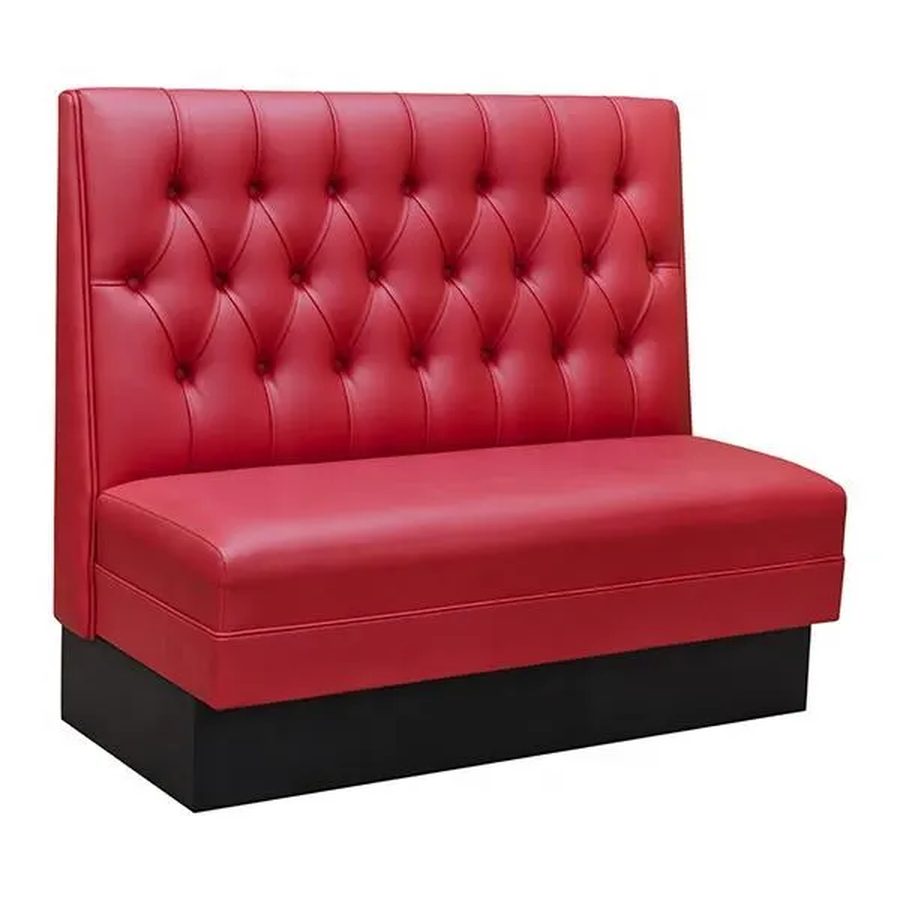
Booth Run, Solid Wood, Upholstered Seat
- Solid wood frame
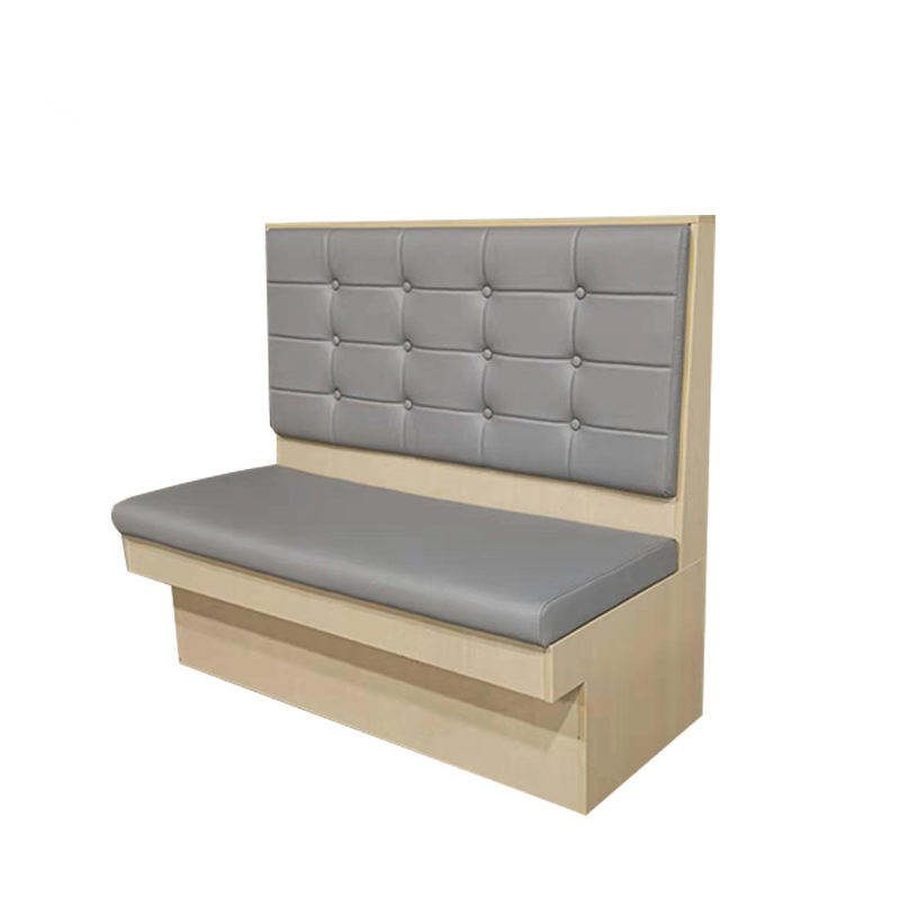
Booth Run, Powder-Coated Steel, Upholstered Seat
- Welded steel tube frame
Bench Row, Solid Wood, Upholstered Seat
- Solid wood frame
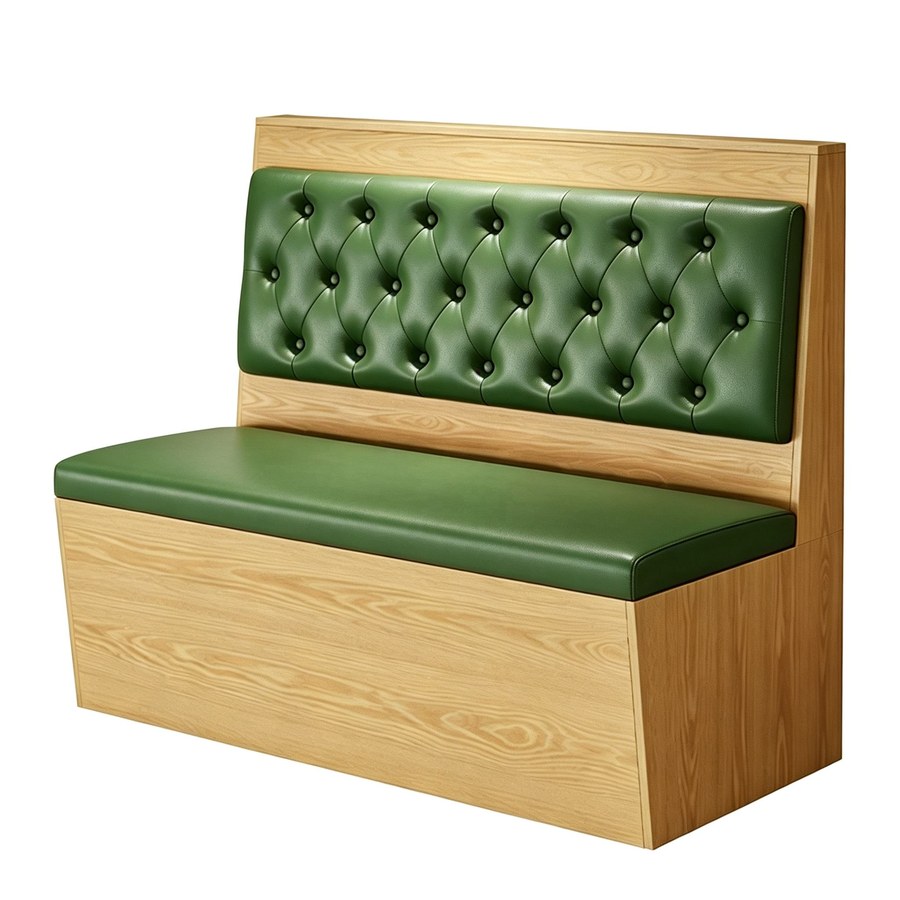
Booth Run, Plywood, Buttoned Back
- Plywood carcass under a timber-veneered plinth
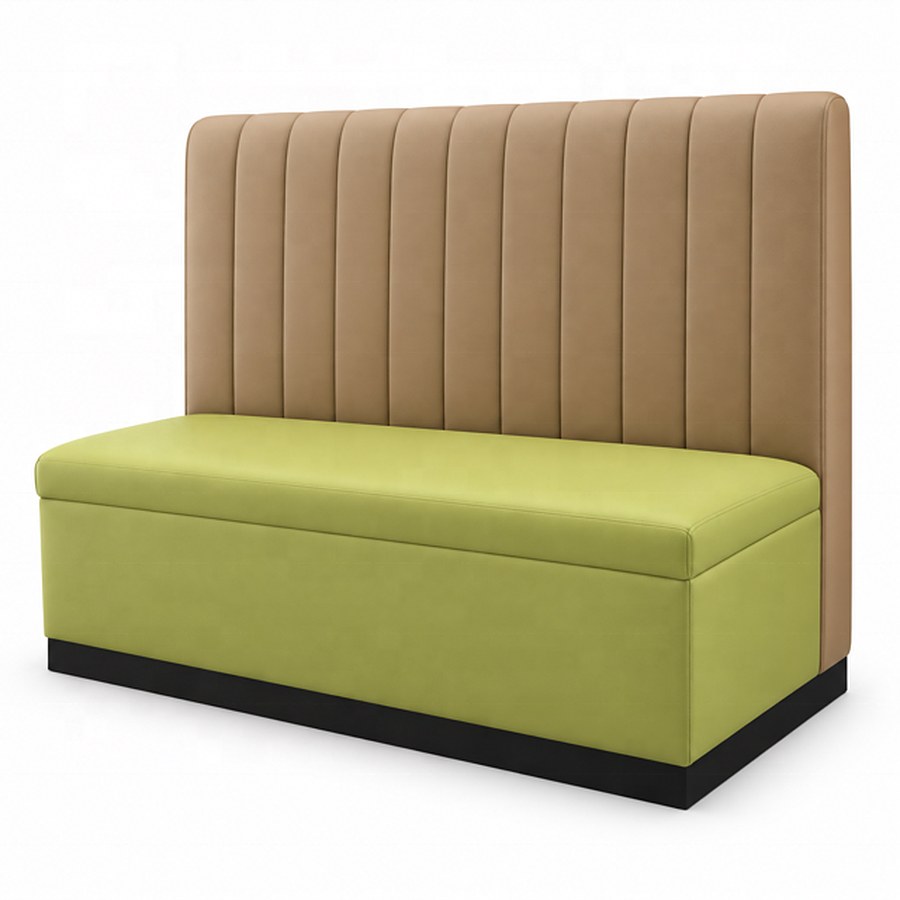
Booth Run, Solid Wood, Channel-Tufted
- Solid wood frame with a channel-tufted back
?Questions
Can a run be curved?
Curved runs are made to a radius you specify, in 1,200 mm segments with a faceted back. Send the radius and the wall condition and the segments come back numbered in order.
What goes behind the bench?
Nothing structural. The carcass carries its own weight on a steel sub-frame, so it does not lean on the wall and does not need a fixing into plasterboard.
How are runs repaired after damage?
Pads, toe-kicks and individual panels are orderable on their own code. One torn pad in one module does not mean a new bench.
Next in the programme
Price the booth line for your next wave
Send the store count and the dates. The answer comes back as a quantity per unit and a wave schedule, on one sheet.